YouTube didn't ban AI video. It banned laziness.
The AI slop purge targets mass production, not AI. Read YouTube's own policy text closely and you get a design brief for anyone building AI video tools, plus a fair case for the faceless creators caught in the crossfire.
The short answer
No. YouTube demonetises mass-produced, templated video however it is made, and AI-assisted channels stay eligible; the January 2026 removals were for spam, scams and deceptive practices, not for using AI.
Key takeaways
- Kapwing found 16 of the top 100 AI slop channels gone in January 2026 (35M subscribers, 4.72B views); YouTube said it removed 11 for spam, deceptive practices and scams.
- The July 2025 'inauthentic content' change was a rename and clarification; YouTube says mass-produced content was never monetizable.
- Since 16 July 2026, YPP splits inauthentic content into generic or repetitive, off-putting, and AI personas on sensitive topics.
- YouTube's policy never mentions faces, but creators report the algorithm favours on-camera hosts, a proxy that is easy to game.
- Disclosing AI use doesn't limit reach or monetization, according to YouTube's help page.
- AI video tools should build in human checkpoints, provenance, variation checks and no mass-upload automation.
YouTube did not ban AI video. It banned content that looks like nobody made a decision while making it, and its own policy text says so almost word for word. If you build AI video tools, that distinction is the most useful product brief you will get this year, and most of the industry is reading it wrong.
I’ve been reading these policy pages closely because I’m building an AI video tool myself. So this isn’t a hot take from the sidelines. It’s me reading the rulebook before I ship something that could get its users demonetised.
What happened in January, and what didn’t
Start with the headline everyone shares. In late January 2026, Kapwing reported that 16 of the 100 most-subscribed “AI slop” channels it had tracked were gone. Eleven were deleted outright and five had every video wiped. Together they had about 35 million subscribers, 4.72 billion lifetime views and, by Kapwing’s Social Blade-based estimate, close to $10 million a year in earnings. The two biggest casualties, CuentosFacianantes and Imperio de Jesus, had more than 5.8 million subscribers each.
The Next Web later summarised this as YouTube terminating 16 channels “under its inauthentic content policy.” That’s close, but it gets two details wrong, and both matter for this argument:
- Not all 16 were YouTube’s doing. A YouTube spokesperson told The Verge that 11 of the flagged channels were removed for breaking its policies on spam, deceptive practices and scams. One was suspended from the YouTube Partner Program (YPP). The rest were renamed, set to private or deleted by their owners.
- Removal and demonetisation are different levers. Spam and deceptive practices sit in the Community Guidelines, which apply to everyone and get content taken down. “Inauthentic content” is a YPP monetization rule. Break it and you lose ad money, but your videos can stay up.
YouTube’s statement to The Verge is the cleanest summary of its position I’ve found: “Generative AI is a tool, and like any tool it can be used to make both high and low quality content.”
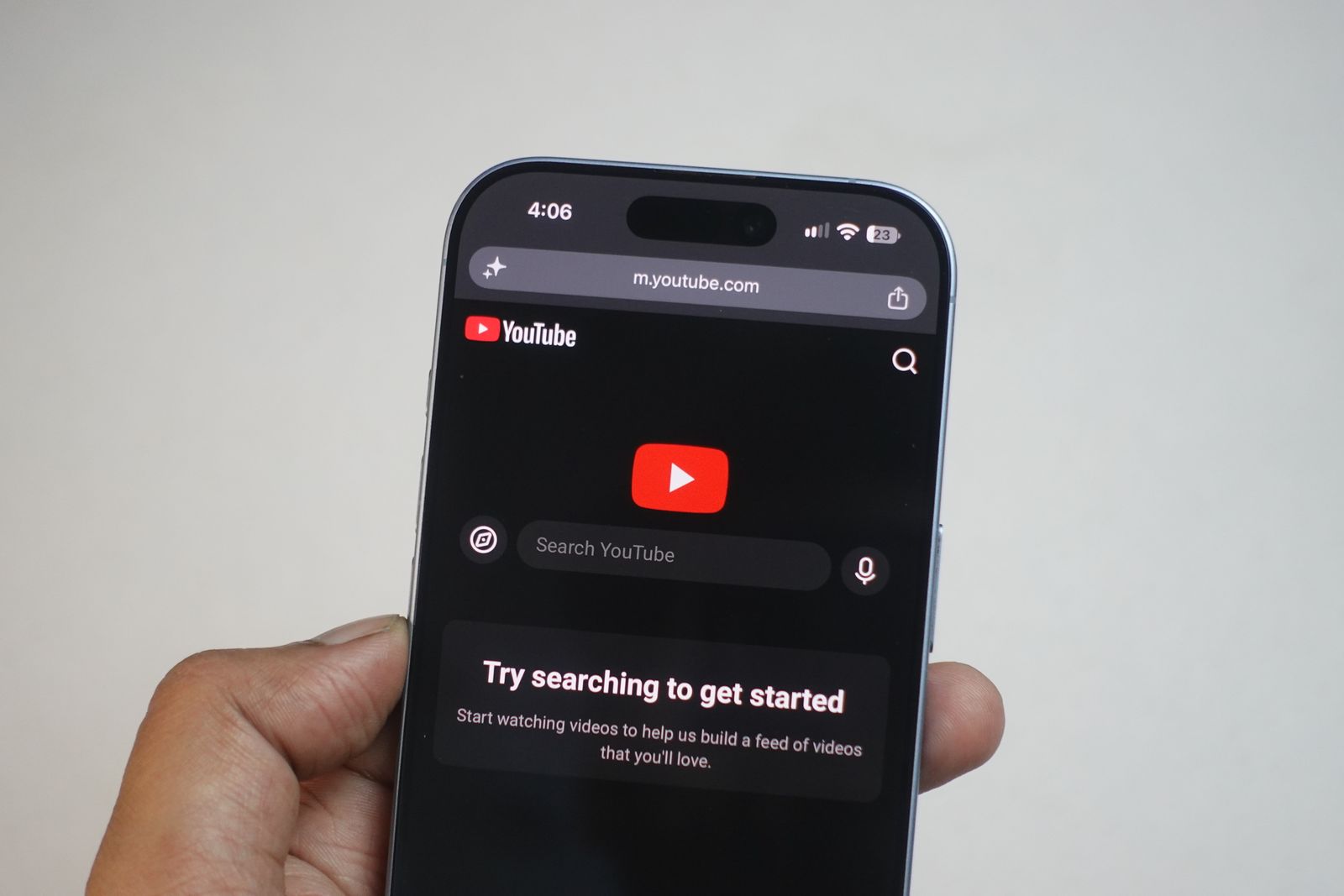
The feed is the product, and slop is a feed-quality problem. Photo: Deepanker Verma / Pexels
The policy barely changed. Enforcement did.
The rule behind all this is older than the panic. On 15 July 2025, YouTube’s monetization policy page logged what it called “a minor update to our ‘repetitious content’ policy to better clarify this includes content that is repetitive or mass-produced,” and renamed it “inauthentic content.” Then came the line most coverage skipped: “This type of content has always been ineligible for monetization.”
Creator Liaison Rene Ritchie said the same thing on X when the backlash started:
TeamYouTube’s follow-up in the help community was even more direct about AI: “We welcome creators using AI tools to enhance their storytelling, and channels that use AI in their content remain eligible to monetize.” It also said the guidelines “apply regardless of how the content was made.”
Then, on 16 July 2026, YouTube split “inauthentic content” into three named buckets: generic or repetitive content, unsatisfying or off-putting content, and AI personas related to sensitive topics. Matt Halprin, YouTube’s VP of Trust & Safety, walked through all three with Ritchie on the Creator Insider channel. If you build or publish video, this ten-minute video is worth more than any “how to monetise faceless channels” tutorial:
Halprin’s framing, as quoted by TechCrunch, is the whole thesis of this post in his own words: the same tool “can allow you to make lots of videos really quickly that are very similar. They’re very generic and don’t really have a narrative arc and don’t really show your creativity… that’s the stuff that we don’t want to have in YPP.”
So, policy versus enforcement:
| What changed | What didn’t | |
|---|---|---|
| Policy text | Renamed (July 2025), then split into three named buckets (July 2026) | Mass-produced, repetitive content was never monetizable |
| Enforcement | Terminations for spam and scams, plus YPP removals at channel level | AI use on its own is not a violation |
| Disclosure | Automatic AI labels from YouTube’s own tools, C2PA metadata and internal detection | “Disclosing AI content alone won’t limit a video’s audience or impact its eligibility to earn money” |
The faceless-creator problem: a wrong proxy
Here’s the part where I think YouTube deserves less credit than its policy text earns.
Read the monetization policy end to end and you won’t find the word “face” anywhere. The test is about substance: “the substance of each video should be materially varied and deliver creative, educational, or other value.” That’s a good test, and it says nothing about who appears on camera.
Creators are describing something different on the ground. In June 2026 The Hollywood Reporter talked to faceless operators, people who make voiceover explainers, niche history and story channels without ever showing themselves. Noah Morris, who runs six faceless channels, said YouTube’s algorithm “was tweaked to reward videos incorporating human faces.” Some operators are now hiring cheap on-camera hosts on Fiverr and Upwork to front their videos. Craig Billings, who runs the science channel Doctor NOS (1.7 million subscribers) and shows his face, said: “The people who do the same content as me without their face in it, most of them are getting demonetized.” TNW then built its collateral-damage argument on that reporting.
To be fair, I couldn’t find YouTube confirming a face signal anywhere. What we have is creator testimony, not a published ranking factor. But if that is how the system behaves, it’s a textbook proxy failure:
- A face measures presence, not creative input. A solo creator who researches, scripts and voices every episode with a decent mic adds plenty of input. A bot farm that pastes a hired host over a templated script adds none.
- Proxies get gamed immediately. The Fiverr-host workaround is that gaming, happening in public. Once “has a face” becomes the signal, faces are just one more thing to buy cheaply.
- The cost lands on the wrong people. Many faceless channels were viable for years before generative video existed: people who are camera-shy, privacy-conscious, disabled, or working in a second language. They didn’t cause the slop wave, yet they may be paying for it.
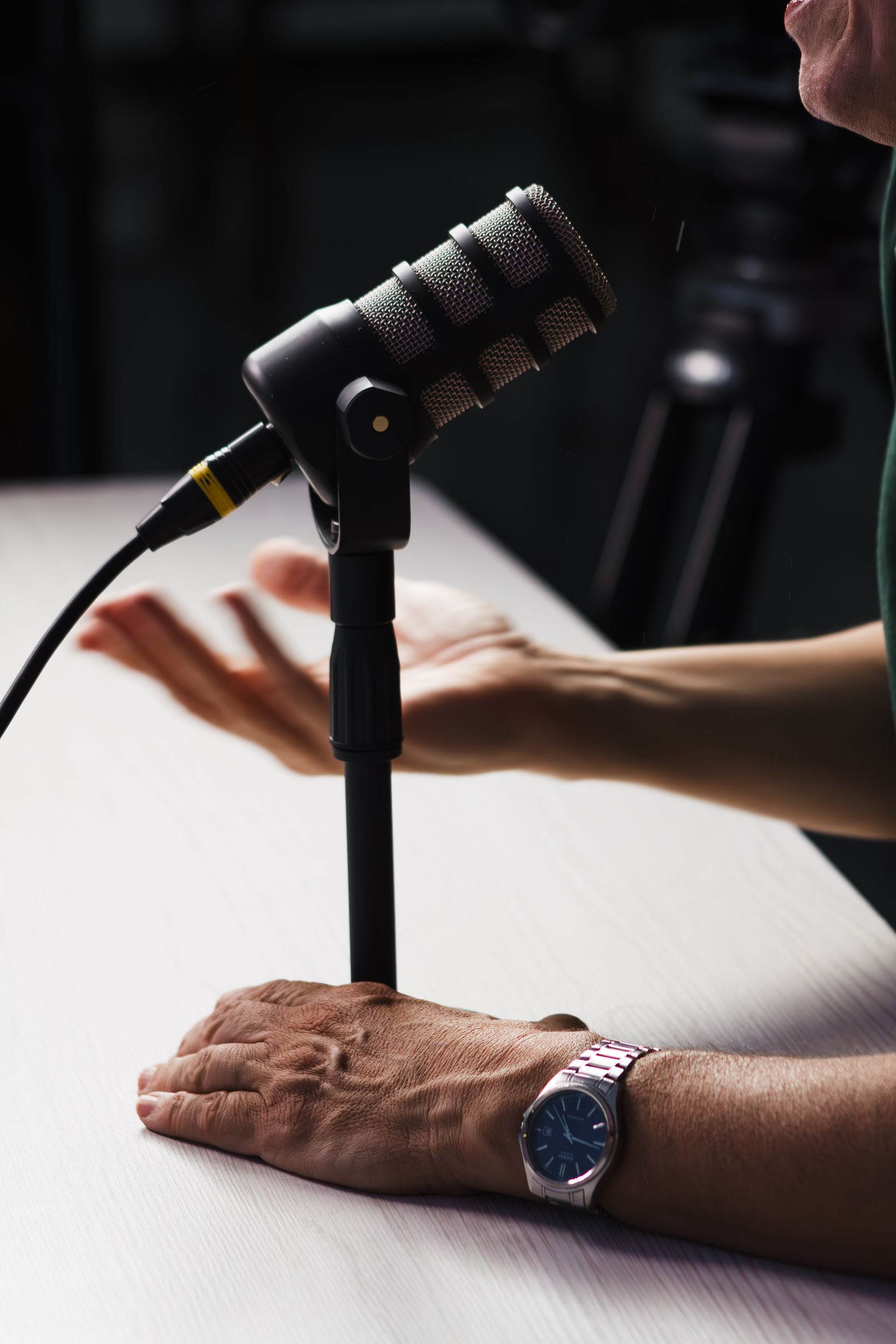
All human, no face. Photo: Abdellah Benziane / Pexels
Enforcement working at channel level makes this worse. YouTube’s reviewers look at a channel’s “main theme,” “most viewed videos,” “newest videos” and metadata, and the reused-content section warns that if YouTube “cannot clearly tell that you made the content, monetization may be removed from your entire channel.” One misjudgement doesn’t cost one video’s revenue. It can cost all of it.
My take: the written policy is fair, and any face heuristic in enforcement is lazy in exactly the way the policy condemns. Which is a little ironic.
What “creative input” actually looks like in a pipeline
Strip out the drama and YouTube has published a fairly specific spec. Its “allowed” examples include “using AI to visualize a unique character and narrative you invented” and “using AI to edit your video scripts or generate a unique background visual.” Its “not allowed” examples include “AI-generated content made with generic or unoriginal templates giving the impression of mass production without adding the creator’s original, authentic insights or perspective” and “videos that stitch together unrelated or inconsistent AI clips to surprise or shock viewers.”
Map that onto the stages of a typical AI video pipeline and you get something a tool can actually act on:
| Pipeline stage | What the policy rewards | What gets channels flagged | What a tool should do |
|---|---|---|---|
| Premise | “A distinct storyline, focus, or concept” per video | Same scenario, same outcome, video after video | Require a human-written premise; never auto-generate the idea queue |
| Script | “Original, authentic insights or perspective”; AI script editing is fine | Narrated stories “with only superficial differences between them” | Treat AI as editor, not author; show how much of the final script the human changed |
| Visuals | AI used to visualise something you invented | Unrelated AI clips stitched together for shock | Tie every shot to a script beat so there is a narrative arc |
| Voice | Cloning your own voice needs no disclosure | AI “doctor” or “financial guru” personas | Block synthetic expert personas on health, legal, finance and politics |
| Disclosure | Disclosing realistic synthetic content | Consistently not disclosing realistic AI content | Detect when the “AI use” toggle applies and keep provenance metadata |
| Channel cadence | Series with a recognisable format but varied substance | Content that “feels interchangeable from video to video” | Compare each new video with the creator’s recent uploads before export |

Creative input is the decisions, not the hardware. Photo: Jakub Zerdzicki / Pexels
That last row is the one I find most interesting as a builder, because it’s measurable. YouTube’s reviewers look at your channel as a body of work, so your tool should too. Here is an illustrative sketch of a pre-export “sameness” check. It’s not production code, just the shape of the idea:
import numpy as np

def sameness_report(new_script_vec, recent_script_vecs, threshold=0.92):
    """Compare a new script embedding against the creator's recent uploads.

    Vectors come from any sentence-embedding model. The threshold is a
    product decision, not a YouTube number: YouTube publishes no score.
    """
    if not recent_script_vecs:
        return {"max_similarity": 0.0, "too_similar": []}
    recent = np.array(recent_script_vecs)
    sims = recent @ new_script_vec / (
        np.linalg.norm(recent, axis=1) * np.linalg.norm(new_script_vec)
    )
    flagged = [i for i, s in enumerate(sims) if s >= threshold]
    return {"max_similarity": float(sims.max()), "too_similar": flagged}
The point isn’t the cosine similarity. It’s that the tool tells the creator “this reads like your last four videos” before YouTube’s reviewers do.
What I’m designing Film Maker around
Film Maker is the AI video tool I’m building. It’s a work in progress, and this is not a launch post or a feature list. It’s the set of design principles I’ve taken from reading these policies, written down publicly so I can be held to them:
- A human checkpoint at every stage that matters. The premise, the script and the final cut each need a human decision. The tool can suggest, draft and edit, but it shouldn’t move from idea to finished video without the creator choosing something at each step. If a pipeline can run end to end without a person, it will eventually be used that way.
- Provenance and disclosure by default. Keep a record of what was generated, what was edited and by whom. Flag the cases where YouTube’s “AI use” disclosure clearly applies: realistic scenes that never happened, real people or places, AI music. Preserve content credentials such as C2PA metadata wherever the pipeline allows. Disclosure doesn’t hurt reach, according to YouTube’s own help page, so there’s no reason to make it optional busywork.
- Variation over templating. Templates are great for intros, outros and brand style, which YouTube explicitly allows. They shouldn’t drive substance. The tool should push back when a new project looks too much like the last few.
- No mass-upload automation. No “generate 50 variants and schedule them” button. Export, review, publish. Building a slop cannon and adding a disclaimer is still building a slop cannon.
- No synthetic experts on sensitive topics. No AI personas presenting as doctors, lawyers or financial advisers. YouTube won’t monetise them, and more importantly, viewers get hurt by them.
None of this makes a tool “YouTube-safe,” and I won’t pretend it does. Platforms change enforcement faster than any of us ship. But a tool designed around creative input is aligned with the written policy, and I think the written policy is a better long-term bet than whatever heuristic enforcement happens to use this quarter.
The line, as plainly as I can draw it
If you’re a creator: AI in your workflow is fine. Making videos that are interchangeable isn’t. If you’re faceless, your real risk isn’t the missing face. It’s looking templated to a system that may treat the missing face as a clue. Build a channel where every video clearly has a reason to exist.
If you build tools: your users will get judged on their output, and your defaults shape it. The tools that last will be the ones that make human decisions easy and skipping them hard.
YouTube didn’t ban AI video. It banned laziness, and occasionally it confuses shyness with laziness. Our job as toolmakers is to make the first easy to avoid and to make the case loudly when the second happens.
Disagree? Especially if you run a faceless channel and the numbers tell a different story, reply and tell me. I’d rather update this post than defend it.
Frequently asked questions
Can you monetize AI-generated videos on YouTube?
Yes. TeamYouTube has said channels that use AI remain eligible for the YouTube Partner Program, as long as the content isn't mass-produced, repetitive or otherwise against monetization policies, and realistic synthetic content is disclosed.
What is YouTube's inauthentic content policy?
It is the YPP rule, renamed from 'repetitious content' in July 2025, that makes templated, mass-produced or interchangeable videos ineligible for ads. In July 2026 YouTube split it into generic or repetitive content, unsatisfying or off-putting content, and AI personas on sensitive topics.
Do faceless YouTube channels get demonetized?
Not for being faceless. The written policy judges substance and variation, not whether a host appears on camera. However, creators interviewed by The Hollywood Reporter say faceless channels have been hit harder, and YouTube has not published any face-related signal.
Do I have to label AI content on YouTube?
Only when it looks realistic, for example a real person saying something they didn't, altered footage of a real event or place, a realistic scene that never happened, or AI music that is the main focus. Non-realistic content and minor edits, such as AI-assisted scripts or captions, don't need a label.
Why were 16 AI slop channels removed in January 2026?
Kapwing reported them missing from its top-100 list. YouTube told The Verge it removed 11 for violating its spam, deceptive practices and scams policies, suspended one from YPP, and the remaining channels were renamed, made private or deleted by their owners.
Sources
- YouTube channel monetization policies YouTube Help
- Response to creator questions about YPP policies (July 2025) YouTube Help Community (TeamYouTube)
- Disclosing use of GenAI content YouTube Help
- Building trust on YouTube: 'Captured with a camera' disclosure YouTube Help
- YouTube's Inauthentic Content Policy - Explained! Creator Insider (YouTube)
- From the CEO: What's coming to YouTube in 2026 YouTube Official Blog
- YouTube's top AI slop channels are disappearing The Verge
- YouTube Removes Major AI Slop Channels With Combined $9.8M In Estimated Annual Revenue Net Influencer
- YouTube's AI slop purge is punishing the human creators who never showed their faces The Next Web
- Faceless Creators Take a Hit As YouTube Cracks Down on AI Slop The Hollywood Reporter
- YouTube clarifies policies around AI slop and upsetting videos TechCrunch
- AI Slop Report: The Global Rise of Low-Quality AI Videos Kapwing
Found this useful?
Clap (up to 50×) so more people find it.
Keep reading

Personal agents explained: Muse vs Grok Bot vs Duet vs dots
What a personal agent is, the eight-box architecture they all share, what people use them for, how the big four compare, and why it all traces back to a lobster called Clawdbot.

Your next website visitor is an AI agent
AI agents now browse, compare and buy for people. I sent agent-labelled requests to six big retailers, and over half hit a wall. The fix is verification, not open doors.

The EU AI Act wasn't delayed for you
The Digital Omnibus pushed high-risk AI rules to 2027, but chatbot disclosure, content marking and deepfake labels already apply. What Article 50 means for builders and publishers, plus a one-page checklist.